
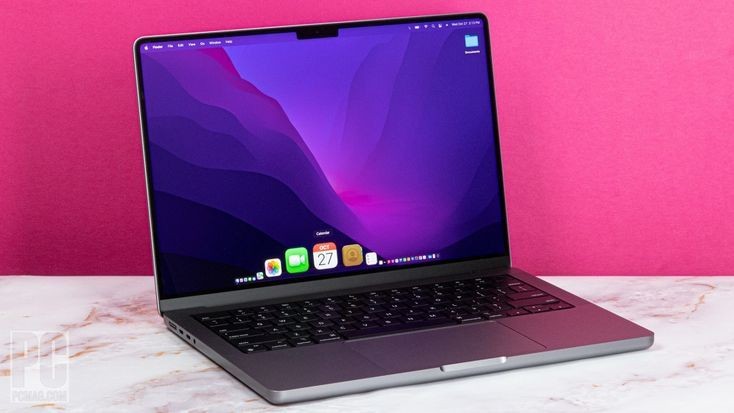
The rise of AI-powered laptops in 2025 marks a transformational phase in personal computing, where the integration of specialized neural processing units (NPUs) and enhanced AI capabilities are redefining laptop performance, efficiency, and user experience.
These devices embody the future, delivering unprecedented intelligence in tasks ranging from content creation and multitasking to enhanced security and smart power management.
AI-powered laptops increasingly become indispensable tools for professionals, creatives, and everyday users alike, offering a seamless blend of power and mobility.
The Impact of AI-Powered Laptops on Computing Performance
AI-powered laptops in 2025 underpin a new paradigm in computational performance. These laptops incorporate purpose-built AI accelerators alongside high-performance CPUs and GPUs, enabling real-time execution of machine learning tasks locally on the device.
This architecture reduces latency, increases efficiency, and brings AI applications such as voice recognition, natural language processing, and intelligent automation directly to users without needing cloud reliance.
Leading chip manufacturers have embedded NPUs capable of delivering tens of trillions of operations per second (TOPS), effectively transforming laptops into powerful AI workstations.
For instance, the AMD Ryzen AI 9 395 chip, Intel Core Ultra series with integrated AI acceleration, and Apple’s M4 chip with Neural Engine all exemplify this trend.
“Integrating AI at the silicon level is not just a performance boost, it fundamentally changes user interaction patterns and productivity workflows,” says a Senior Architect at a major chipset manufacturer.
Hardware Innovations Driving AI-Powered Laptops
Processors and Neural Units
At the core of AI-powered laptops are processors with multiple integrated domains: general-purpose CPU cores, high-throughput GPU cores, and dedicated NPUs. These processors are optimized for multitasking and parallel AI workloads, delivering exceptional power efficiency.
AI-integrated chips can dynamically allocate workloads, intelligently balance power consumption, and accelerate AI inference tasks such as real-time translation, video enhancements, and biometric authentication.
Memory and Storage
AI workloads demand rapid access to data. AI-powered laptops employ high-speed LPDDR5X RAM configurations, commonly 16GB or 32GB, paired with NVMe Gen 4 or Gen 5 SSDs. These combinations improve bandwidth for AI data models and reduce bottlenecks during data-intensive operations like video rendering or data analysis.
Displays and Input Technologies
AI-powered laptops often feature advanced display technologies such as 3K OLED or Mini-LED, with refresh rates up to 165Hz to support both creative workflows and gaming. AI-driven adaptive refresh rate technology optimizes battery life by adjusting screen performance dynamically.
Additionally, intelligent input devices, including AI-enhanced touchpads, digital styluses, and voice assistants—enable more natural interaction paradigms.
AI-Powered Laptop Use Cases and Advantages
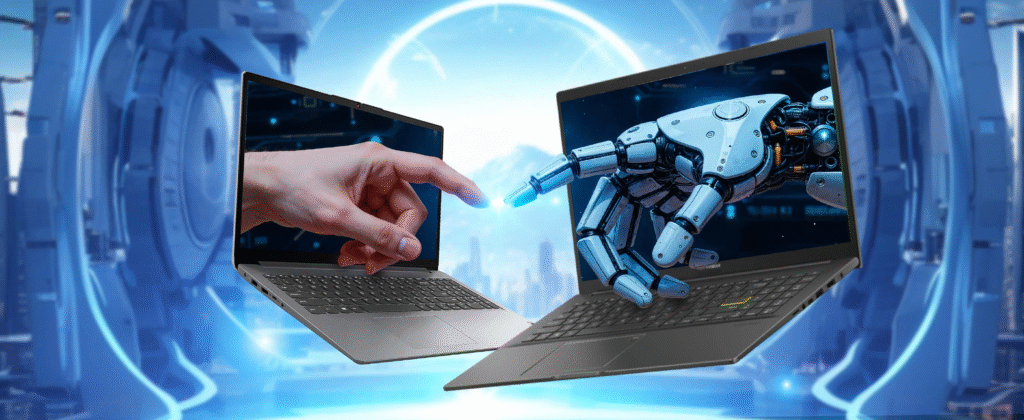
Enhanced Productivity and Creativity
- Smart multitasking: AI models predict app usage patterns, preloading applications and allocating CPU/GPU resources optimally to ensure smooth workflow transitions.
- Content creation: AI-assisted video editing, photo enhancement, and speech-to-text transcription accelerate creative processes.
- Voice-to-command: Natural language processing accelerates hands-free operations, improving accessibility and collaboration.
Improved Security and Privacy
AI-powered laptops utilize neural networks for real-time threat detection, biometric verification including facial recognition and fingerprint scanning, and anomaly detection to protect sensitive information effectively.
Energy Efficiency and Battery Optimization
AI-assisted power management monitors usage and system status, adapting CPU performance and display settings to extend battery life without user intervention. This results in laptops that can achieve up to 15-20 hours of mixed workload runtime.
Key Models of AI-Powered Laptops in 2025
Below is a comparative data table highlighting top AI-powered laptops available in 2025, showcasing their specs and strengths:
| Laptop Model | AI Chipset | Display | RAM / Storage | Battery Life (hrs) | Price Range (USD) |
| Asus ROG Flow Z13 | AMD Ryzen AI Max+ 395 (NPU) | 13″ 2.5K Mini-LED | 16GB / 1TB SSD | 7 | $1,600 – $2,000 |
| Apple MacBook Air M4 | Apple M4 Neural Engine | 13.6″ Retina | 16GB / 512GB SSD | 18 – 20 | $1,200 – $1,500 |
| Lenovo Yoga Slim 9i | Intel Core Ultra + 48 TOPS | 14″ 4K OLED | 16GB / 1TB SSD | 15 | $1,400 – $1,700 |
| HP OmniBook Ultra Flip | Intel Core Ultra + NPU | 14″ 3K OLED Touch | 16GB / 512GB SSD | 13 | $1,300 – $1,600 |
This data exemplifies how AI-powered laptops combine compute power and battery longevity to meet the demands of various user groups, from students to professionals requiring workstation-level capability in mobile form.
Steps to Optimize AI-Powered Laptop Use
- Update Drivers and Firmware: Ensure the latest versions for AI accelerators and CPU/GPU drivers are installed for maximum efficiency.
- Use AI-Powered Software: Leverage applications that tap into on-device AI for creative and productivity tasks.
- Configure Power Settings: Utilize AI-driven power management profiles for personalized battery optimization.
- Enhance Security: Activate biometric and AI-based security features for data protection.
- Maintain Regular Updates: Keep the operating system and AI frameworks up-to-date for improved performance and security.
Advantages of AI-Powered Laptops
- Seamless AI integration accelerates complex tasks.
- Optimized performance and energy consumption enhance user experience.
- Advanced security protects sensitive data proactively.
- Portability unites with desktop-level performance.
- Intuitive, adaptive interfaces simplify workflow.
Challenges and Future Outlook
Despite their remarkable capabilities, AI-powered laptops face challenges such as thermal management complexities, device cost, and software ecosystem maturity.
However, continuous investment in silicon design and AI software innovations ensure steady progress. Analysts predict rapid adoption growth, with AI-powered laptops becoming the new norm by 2030.
Conclusion
The rise of AI-powered laptops in 2025 signals a profound shift in personal computing. By blending dedicated AI hardware with traditional compute components, these laptops deliver unparalleled performance, efficiency, and user-centric intelligence.
Their ability to handle complex workflows with speed and security truly elevates the laptop experience. As AI technology continues to integrate deeper into hardware, AI-powered laptops will be the cornerstone devices powering work, creativity, and daily computing tasks well into the future.

Leave a Reply