
IOS in 2025 continues to be one of the most stable and mature mobile platforms, combining tight hardware–software integration, strong security defaults, and an ecosystem of high‑quality apps that target both consumers and professionals.
iPhone Operating System now balances this maturity with more openness in customization and regulatory compliance, which creates a mix of advantages and trade‑offs that users must weigh carefully when choosing a primary smartphone platform.
Read More on: Tech UAE
Core strengths of IOS in 2025
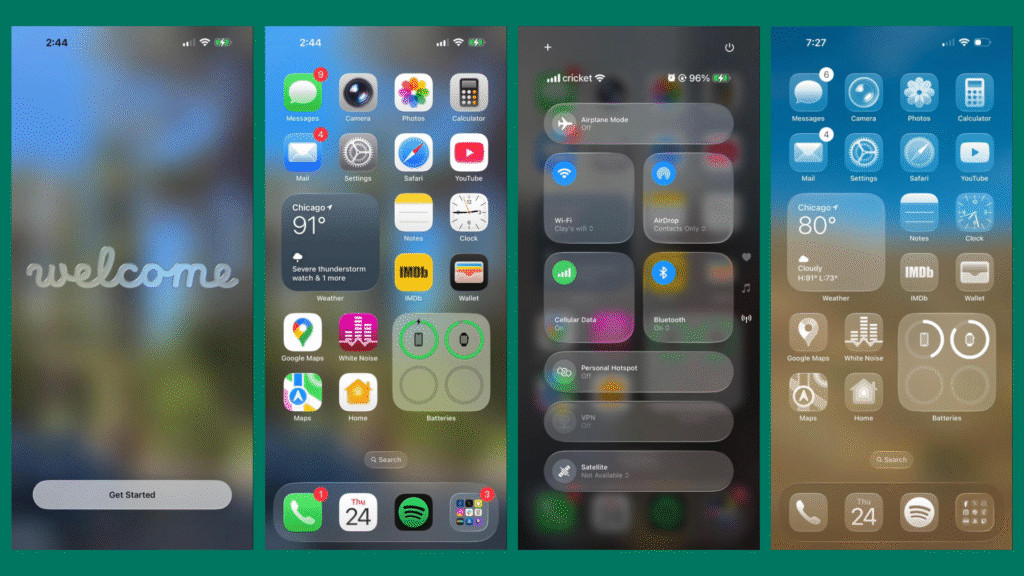
IOS in 2025 is centered around IOS 18, which refines the interface, expands on‑device intelligence, and deepens the integration between iPhone, iPad, Mac, and Apple Watch for seamless cross‑device workflows.
At the user level, enhancements in the lock screen, widgets, Control Center, and notifications make it easier to tailor daily interactions without sacrificing the consistency and predictability that long‑time IOS users expect.
IOS also focuses on intelligent assistance and context awareness, bringing more processing on device to classify content, summarize information, and understand intent across apps.
This approach not only reduces latency and improves responsiveness, but also limits how often data must leave the device, which is crucial for privacy‑sensitive use cases such as health, finance, and enterprise communication.
Performance and optimization in IOS
IOS benefits directly from Apple’s control over both silicon and software, with the OS tuned for specific SoC generations, GPU architectures, and neural engines.
This tuning allows IOS to maintain smooth frame rates, quick app launches, and responsive multitasking even as new visual effects, camera features, and machine‑learning workloads are added each year.
In everyday scenarios, iPhone Operating System tends to maintain this performance over multiple major versions, giving users confidence that updating will not instantly degrade the experience.
Combined with aggressive background app management and priority‑based scheduling, IOS allocates CPU, GPU, and NPU resources where they are most needed, such as gaming, video capture, or real‑time image processing.
IOS battery life and resource efficiency
IOS uses a layered power‑management model that coordinates hardware power states, app lifecycle events, and network usage. As a result, the system can keep frequently used apps ready in memory while still suspending background tasks that are not time critical, lowering idle drain over the day.
Battery optimization features in iPhone Operating System also adapt to behavior, learning typical charging patterns to reduce battery wear and pre‑conditioning the device for heavy use periods.
For users, this translates into more reliable all‑day endurance, fewer thermal slowdowns, and a better balance between performance bursts and long‑term battery health.
Security architecture of IOS
IOS is built around a chain of trust that starts in hardware, using secure boot, signed firmware, and a dedicated secure enclave to protect sensitive keys and biometric data.
Mandatory code signing and strict sandboxing mean that even if an app is compromised, its ability to access other apps’ data or system resources is heavily constrained.
On top of this foundation, IOS incorporates exploit mitigation techniques such as address randomization, memory protection, and continuous patching.
While no system is immune to advanced threats, this layered design significantly raises the cost of successful attacks, especially at scale, which is a key reason many enterprises and governments favor IOS for sensitive deployments.
Privacy and data controls in IOS
IOS extends security with strong privacy controls, exposing granular permissions for location, camera, microphone, photos, motion sensors, and local network access. The system surfaces clear prompts that explain why an app is requesting data, with options for one‑time, limited, or continuous access, allowing users to fine‑tune exposure.
Additionally, IOS emphasizes on‑device processing for features like content classification, text understanding, and smart suggestions, which reduces dependence on remote servers. For privacy professionals, this aligns with the principle of data minimization, as more intelligence is delivered without sending full raw data streams off the device.
Market position and adoption of IOS
iPhone Operating System continues to dominate the premium segment in developed markets, particularly in North America and parts of Europe, where carrier subsidies, trade‑in programs, and higher purchasing power make iPhones the default choice.
This positioning leads to high adoption rates of the latest IOS versions, because most active devices fall within the relatively recent hardware generations that receive current updates.
In emerging markets and price‑sensitive regions, IOS holds a smaller share but often captures users at the top of the spending pyramid.
This creates a user base that is smaller in volume but larger in average revenue, driving developers and service providers to treat IOS as a primary or simultaneous launch platform for many commercial apps and subscription services.
IOS regional market characteristics
In North America, IOS often alternates with Android for overall unit share but consistently leads in high‑end devices and in‑app spending. In Western Europe, iPhone Operating System is strong in major cities and enterprise contexts, while Android dominates lower price tiers and prepaid segments.
Across Asia, the picture is more fragmented: IOS is particularly strong in markets that favor premium brands and long software support, while Android leads where ultra‑budget and mid‑range devices make up the bulk of sales.
This regional variety means that app localization and payment options often arrive first on IOS in markets where iPhone penetration is high.
IOS Adoption and Support Profile (2025)
| Metric | Typical IOS Value (2025) | Notes |
|---|---|---|
| Major OS support window | ~5–6 years per device | From initial release to last security fix. |
| Latest IOS adoption (active) | Often >70% on iPhones | High due to fast update rollout. |
| Monthly security update cadence | Approx. 1–2 releases | Includes hotfix and point updates. |
Customization, usability, and ecosystem advantages of IOS
IOS in 2025 offers more customization flexibility than older generations, especially around home screen layout, lock screen styles, widgets, and Control Center tiles.
Users can design multiple focused screens tied to modes such as work or personal, selectively exposing apps and notifications that match context without losing the visual coherence of the system.
At the same time, the user experience remains guided by consistent design guidelines, typography, and interaction models. This consistency benefits both new and experienced users, because features like gestures, share sheets, and system menus behave similarly across the entire app catalog, reducing cognitive load when switching between tasks.
Integrated services and developer ecosystem
The IOS ecosystem is anchored by tightly integrated services such as iCloud, iMessage, FaceTime, Wallet, Health, and Home, all designed to share data securely across the user’s devices.
This integration supports workflows like taking a photo on iPhone and editing it on a Mac, receiving phone calls on an iPad, or using a watch to unlock a laptop, without manual setup beyond initial sign‑in.
For developers, iPhone Operating System offers a relatively controlled hardware matrix and a well‑documented set of frameworks for graphics, audio, networking, and machine learning.
This stability makes it practical to invest in polished interfaces, high‑performance rendering, and advanced offline capabilities, knowing that most active devices will run recent IOS versions with predictable behavior.
Practical advantages of IOS for everyday users
On a daily basis, iPhone Operating System simplifies common tasks by embedding payment, authentication, and sharing flows into the system UI. Features such as secure password autofill, passkey support, and integrated two‑factor prompts reduce friction in signing into services and improve security at the same time.
For families and organizations, iPhone Operating System device management tools, screen‑time controls, and backup mechanisms make it easier to deploy, monitor, and restore multiple devices.
This makes iPhone Operating System particularly attractive in environments where reliability, compliance, and centralized oversight are more important than extreme customizability or experimental features.
Key pros of IOS in 2025
IOS offers a focused set of advantages that stand out clearly in 2025, especially for users who value security, consistency, and long‑term support. The most important benefits can be summarized as concrete, user‑visible strengths that persist across device generations.
- iPhone Operating System delivers a strong security and privacy model backed by hardware enclaves, sandboxing, and regular patches, making it suitable for sensitive personal and enterprise data.
- It is provides long, predictable software support windows, so users typically receive major features and security updates for many years after purchase.
- iPhone Operating System integrates deeply with Apple’s broader ecosystem, enabling seamless workflows across phones, tablets, laptops, watches, and smart‑home devices.
- and allows increasing levels of interface customization while preserving the unified design standards that keep apps and system screens consistent.
- IOS benefits from a vibrant, high‑quality app ecosystem, where many developers choose to launch advanced productivity and creative tools first or in parallel with other platforms.
Limitations and trade‑offs of IOS in 2025
Despite its strengths, iPhone Operating System also introduces constraints that may be significant for certain user segments, especially power users, experimenters, and price‑sensitive buyers.
The closed distribution model and strong central control are a double‑edged sword: they support security and consistency, but also restrict how software can be installed and how apps can interact.
Users who prefer deep customization of the system interface, unrestricted sideloading, or full control over low‑level settings may find IOS limiting. Additionally, the cost of entry to the iPhone Operating System ecosystem remains relatively high compared to budget and mid‑range Android devices, which can be a decisive factor in many markets.
Ecosystem lock‑in and flexibility concerns in IOS
Ecosystem lock‑in on IOS emerges from the combination of apps, services, and data tightly bound to Apple IDs and iCloud. Over time, users accumulate purchases, message histories, photo libraries, and device‑to‑device workflows that are difficult to migrate cleanly to other platforms, increasing the cost of switching.
This lock‑in is amplified by exclusive features like iMessage reactions, FaceTime integration, AirDrop, and certain continuity capabilities that do not have full equivalents elsewhere. As a result, users may feel compelled to remain on IOS even when specific device features or external requirements would otherwise make an alternative platform attractive.
Cost, repairability, and regulatory pressure on IOS
Hardware pricing in the iPhone Operating System ecosystem traditionally targets the mid‑high and flagship tiers, with only limited presence in lower price brackets.
While long software support and high resale value improve the total ownership picture, the initial outlay can still be prohibitive for many buyers, particularly in markets without robust trade‑in programs.
Repairability is another friction point, as tightly integrated designs, proprietary parts, and controlled repair networks can make out‑of‑warranty fixes expensive.
In response, regulators in several regions are pushing right‑to‑repair rules and alternative app distribution requirements, which are gradually forcing IOS to adapt without compromising its core security model.
Notable cons of IOS for advanced users
For advanced users, developers experimenting outside official frameworks, or organizations with non‑standard deployment needs, iPhone Operating System can feel restrictive in ways that directly affect workflows. The following issues often surface in evaluations by technical users who need more flexibility than typical consumers.
- Limited low‑level customization of the iPhone Operating System interface, theming, and system components, especially compared to platforms that allow full launcher replacement and root access.
- Constrained app distribution paths on iPhone Operating System, where sideloading and third‑party stores, where allowed, remain heavily mediated by system security and policy checks.
- Higher average device pricing and accessory certification in the iPhone Operating System ecosystem, which can raise costs for multi‑device deployments or peripheral‑heavy professional setups.
Balanced perspective on IOS in 2025
iPhone Operating System in 2025 stands as a highly optimized, security‑focused, and user‑friendly operating system that excels when reliability, privacy, and tight cross‑device integration are top priorities.
For many individuals, families, and organizations, these strengths outweigh the limitations in customization and hardware choice, especially when planning for multi‑year device life cycles.
At the same time, the closed nature, pricing structure, and ecosystem lock‑in of iPhone Operating System mean it is not the ideal solution for every user profile or every region.
Choosing IOS in 2025 is ultimately a strategic decision: those who align with Apple’s design philosophy and value proposition will find iPhone Operating System a powerful, future‑ready platform, while others may prefer alternatives that emphasize openness, granular control, or lower cost.
In closing, IOS remains a leading mobile platform in 2025, offering a refined balance between performance, security, usability, and ecosystem depth.
Users who embrace the strengths of iPhone Operating System and accept its structural trade‑offs can build a stable, efficient, and privacy‑aware digital life, while keeping an eye on how evolving regulations and market dynamics may further reshape IOS in the years ahead.

Leave a Reply